


Are Aesthetic Lifestyle Products Durable Enough for Daily Use
Last Updated: October 30, 2026
Quick Summary
Aesthetic lifestyle products are durable enough for daily use when durability is treated as a design decision, not an accident. Named materials, reinforced construction, and published care instructions are the clearest signals that a piece will hold up. Follow the care label and most well-made items keep their finish for years.
- Judge quality by construction details, not the product photo or design alone.
- Cotton shrinks with heat and wears thin at stress points over time.
- Wash apparel inside out in cold water to protect the print.
- Divide upfront price by expected uses to compare true cost per use.
- Look for named materials and clear return policies when verifying durability claims.
Table of Contents
- Why Aesthetic Lifestyle Products Can Be Both Beautiful and Durable
- How to Choose Quality Products That Hold Up to Daily Use
- Product Material Durability: What Lasts and What Wears Out
- How to Care for Lifestyle Products So They Last
- Timeless Design and the Case for Buying Less
- Cost Per Use and the Real Value of Long-Term Use
- How to Verify Sustainability and Durability Claims
- Building a Cohesive Home Aesthetic With Pieces You Keep
- Frequently Asked Questions
Why Aesthetic Lifestyle Products Can Be Both Beautiful and Durable
The question of whether aesthetic lifestyle products are durable enough for daily use comes down to one idea: beauty and strength are not opposites. A well-made object earns its place in your day through both presence and performance.
Aesthetic lifestyle products are items chosen for how they look and feel as much as for what they do: apparel, drinkware, decor, and small goods that carry personal meaning. Durability is a design decision, not an accident.
Below, we'll show you exactly how to judge durability before you buy, care for pieces so they last, and decide what is truly worth keeping.
How to Choose Quality Products That Hold Up to Daily Use
Choosing well starts with asking better questions. A good buying decision starts with understanding how a piece is built.
Look past the product photo. Read the material list. Check the construction details. Ask how the item is finished and how it should be cleaned.
A Practical Durability Checklist for Buying Online
Use this checklist before you add anything to a cart:
- Materials are named specifically, not described only as "premium"
- Fabric weight or material blend is listed for apparel
- Construction details appear: stitching, lining, print method, finish
- Care instructions are published and easy to find
- The print or decoration method is described, not just the design
- - [ ] Customer photos and reviews are easy to find
- The return policy is clear and easy to read
- The maker explains why the item is built the way it is
A common mistake is judging quality by the design alone. The design catches your eye. The construction is what keeps the piece in your life.
Product Material Durability: What Lasts and What Wears Out
Material choice decides how a product ages. The most useful approach is to understand how common materials respond to the forces they will actually meet: abrasion, moisture, sunlight, cleaning, and impact. Below is a practical guide by material category, drawn from how these materials are commonly constructed and cared for.
Apparel Fabrics
Cotton is breathable and takes print well, but it shrinks with heat and wears thin at stress points over time. A cotton-polyester blend gains wrinkle resistance and shape retention; the trade-off is slightly less breathability. For printed apparel, the fabric face matters: a 100% cotton face holds ink detail, while a brushed interior adds softness but can mat down with repeated washing.
Wool resists odor and regulates temperature, but it is vulnerable to moths and abrasion in high-friction areas. Linen grows softer with washing but wrinkles easily and can weaken with frequent high-heat drying. Synthetic knits like polyester fleece are durable and quick-drying but can pill and hold odor over time.
Drinkware and Vessels
Stainless steel and aluminum resist impact and corrosion, but the surface finish is the weak point. Painted or vinyl-coated surfaces can chip and peel; a cured UV ink layer bonds more durably and resists scratching. Glass is chemically inert and does not hold odors, but it is brittle under impact. Ceramic holds heat well but can crack with thermal shock. Silicone sleeves and lids are flexible and heat-resistant but can absorb odors and discolor with prolonged sun exposure.
Home Decor and Small Goods
Solid wood can be refinished and repaired, extending its life indefinitely, but it expands and contracts with humidity. Veneer over engineered wood is stable but cannot be sanded or refinished if chipped. Metal frames and fixtures resist wear but may corrode in humid environments without a protective coating. Textiles like throws and cushions wear at seams and edges first; tight weave and reinforced stitching slow that process.
What to Watch in Cleaning and Sunlight
Abrasive cleaners dull finishes and scratch printed surfaces. High heat in a dryer breaks down elastic fibers and fades dyes. Direct sunlight degrades many plastics and fades natural fibers. The care label is the maker's best guess at how the material will age; following it is the simplest way to extend life.
A common mistake is judging durability by weight alone. A heavy fabric can still pill; a light one can be tightly woven and tough. For an example of a heavyweight piece built with durable materials and construction, see the Celestial Compass Heavyweight Streetwear Hoodie | Flagship Edition. The combination of fiber, construction, and finish is what matters.

Here is how the article's material categories tend to age under daily use.
| Material | Strength | Weak point |
|---|---|---|
| Cotton | Breathable, takes print well | Shrinks with heat, wears thin at stress points |
| Cotton-polyester blend | Wrinkle resistance, shape retention | Slightly less breathable |
| Wool | Resists odor, regulates temperature | Vulnerable to moths and abrasion |
| Linen | Grows softer with washing | Wrinkles easily, weakens with high-heat drying |
| Synthetic knits | Durable and quick-drying | Can pill and hold odor |
| Stainless steel and aluminum | Resist impact and corrosion | Surface finish can chip and peel |
| Glass | Chemically inert, holds no odors | Brittle under impact |
| Ceramic | Holds heat well | Can crack with thermal shock |
How to Care for Lifestyle Products So They Last
Care is where most product lifespan is won or lost. A durable piece treated poorly will fail faster than a modest piece treated well.
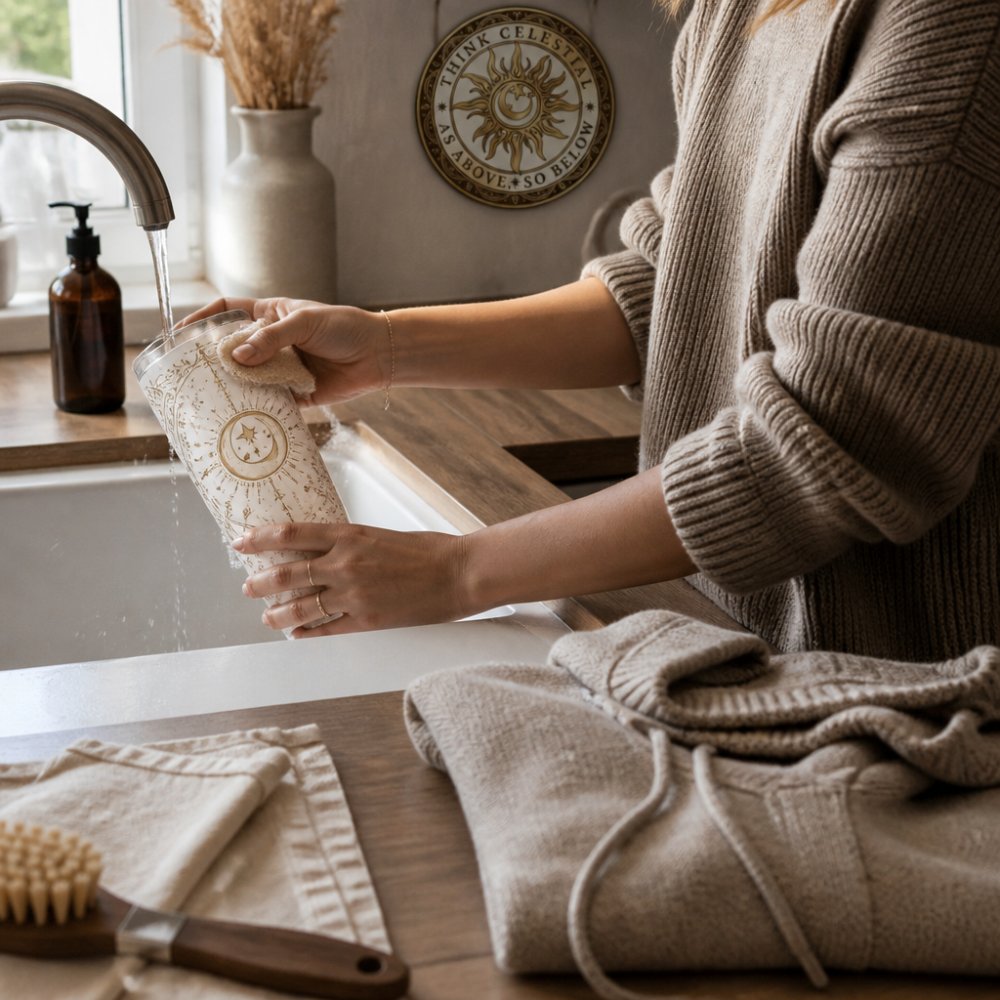
What most guides miss is that care instructions are part of the design. Follow them and the piece keeps its finish.
- Wash apparel inside out in cold water to protect the print
- Skip high heat in the dryer when you can; air dry prints and knits
- Hand wash printed drinkware rather than scrubbing the surface
- Avoid abrasive pads on textured or printed finishes
- Store folded knits flat to hold their shape
- Repair small issues early, before they grow
Watch out: ignoring the care label is the fastest way to shorten a product's life. One hot wash can dull a print that would otherwise last for years.
Timeless Design and the Case for Buying Less
Timeless design is the strongest argument for buying less. A piece with simple lines and a clear idea does not go out of style, so you replace it less often.
Fewer, better pieces can mean less waste over time.
If you want to build that habit, our guide on maintaining minimalist intentional living every day offers practical steps for keeping the practice going.
Cost Per Use and the Real Value of Long-Term Use
Cost per use is the clearest way to judge product value, but it requires more than a glance at the price tag. The method is simple: divide the upfront price by the number of times you realistically expect to use the item over its life. The harder part is estimating that lifespan honestly.
How to Estimate Lifespan
Start with the material and construction guidance above. A well-made piece with named materials, reinforced seams, and published care instructions will typically outlast a cheaper equivalent. Look for signals such as a clear return policy and customer reviews that mention how an item held up over time.
A Simple Comparison
Suppose you are choosing between two hoodies. One is inexpensive and likely to fade or pill within a year of regular wear. The other costs more upfront but, based on its fabric weight, stitching, and care record, is likely to last several years. If you wear the hoodie weekly, the cheaper one may need replacing two or three times over the same period. The higher upfront cost divided by many more uses often lands lower per wear. The same logic applies to drinkware: a tumbler with a durable cured finish that survives daily washing will cost less per use than a cheaper one whose print lifts after a few months.
The Replacement Trap
A cheaper item that breaks and gets replaced often can cost more in the end, both in money and in the time spent re-buying. When you choose with product lifespan in mind, every use lowers the true cost.
Beyond the Number
Cost per use is a tool, not a verdict. A piece you rarely use but deeply value may still earn its place. The point is to make the trade-off visible, so you can decide with clarity rather than habit.
How to Verify Sustainability and Durability Claims
Verification is a habit, not a single check. Many brands use broad language about quality and sustainability. A careful buyer asks for specifics.
Here is how we would check any claim:
- Look for named materials, not vague terms
- Ask what the print or finish method actually is
- Read care instructions as a signal of how the maker expects the item to age
- Seek real customer photos and honest reviews
- Check whether the return policy matches the promise
- Prefer made-to-order production, which reduces waste
For a deeper walkthrough, our conscious consumerism guide for beginners explains how to read claims with care.
Building a Cohesive Home Aesthetic With Pieces You Keep
A cohesive home aesthetic grows from a few pieces you love, chosen to last. Start with one anchor piece per room. Build around it slowly.
Keep to a small palette of materials and tones. Choose objects that serve a purpose and carry meaning. Then add only what earns its place.
Intentional pieces can help tie a room together. For curated options, explore these minimalist home decor picks for professionals. Each addition should feel like it belongs, not like it fills a gap.
Frequently Asked Questions
Are aesthetic lifestyle products durable enough for everyday use?
Many are, but it depends on materials and construction rather than looks. A heavyweight cotton-poly hoodie and a UV-printed tumbler are designed for everyday wear and handling. Before buying, check the fabric weight, seam construction, and print method. Aesthetic lifestyle products made with durability in mind are generally built to hold up better through regular use and washing.
What materials make home and lifestyle products last longer?
For apparel, ring-spun cotton blends with polyester resist pilling and hold color through repeated washing. Check fabric weight and construction details in product listings. For drinkware, the listings describe insulated aluminum with a UV-cured ink layer. Read the specifications before you buy.
How do you care for aesthetic drinkware and apparel?
Follow the care instructions on each product to help protect fabric and prints. Turn printed garments inside out to reduce friction on the design. For tumblers with printed finishes, hand-washing and avoiding abrasive scrubbers help protect the design. Store pieces flat or folded rather than hanging heavy knits. Simple care habits extend product lifespan significantly and keep the aesthetic intact through years of daily use.
What should you check before buying a lifestyle product online?
Review the material composition, fabric weight, and construction details in the listing. Look for customer photos and reviews from buyers who have used the product over time. Confirm the return policy before you order. A practical durability checklist before purchase prevents replacement costs and reduces waste over time.
Durability is a daily practice, not a label. We build apparel and drinkware with sacred geometry and celestial design, using materials and finishes chosen to hold up to real use. Explore the collection and choose pieces made to stay with you. Get started with Think Celestial and build a space and wardrobe that last.
